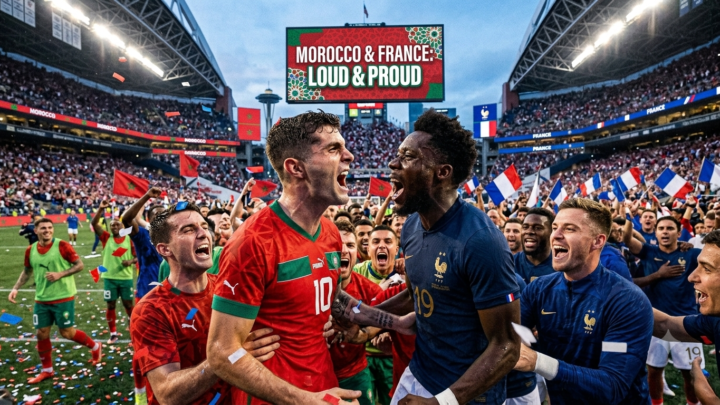
World Cup 2026: Groups, Schedule, Format and Full Guide
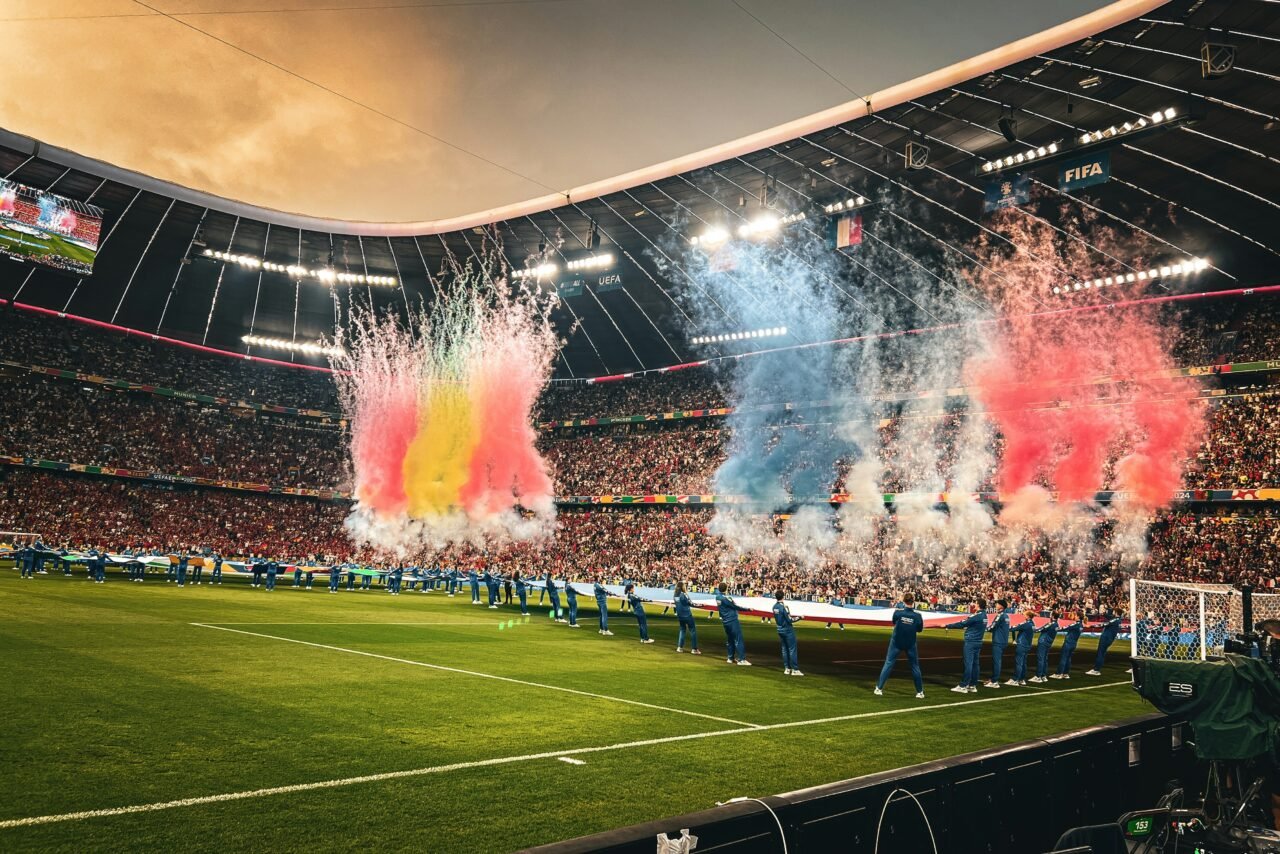
Updated 15 June 2026, with the group stage under way.
World Cup 2026 is the biggest tournament in the competition’s history: 48 teams, 104 matches, 16 cities and three host nations across the United States, Canada and Mexico. It runs from 11 June to 19 July 2026, opened at Estadio Azteca in Mexico City, and ends at MetLife Stadium in New Jersey. This guide covers everything that matters: the new format, all 12 groups, the full schedule, every venue and how to watch.
World Cup 2026 at a glance
Here are the essentials in one place. The 2026 finals are the first to feature 48 nations, up from 32, stretched over 37 days and shared between three countries for the first time. The opening match was Mexico against South Africa on 11 June; the final is on 19 July at MetLife Stadium.
| Detail | 2026 World Cup |
|---|---|
| Hosts | United States, Canada, Mexico |
| Teams | 48 (first ever) |
| Matches | 104 |
| Host cities | 16 |
| Dates | 11 June to 19 July 2026 |
| Opening match | Mexico v South Africa, Estadio Azteca, Mexico City |
| Final | 19 July 2026, MetLife Stadium, New Jersey |
| Defending champions | Argentina (2022 winners) |
You can follow the tournament as it unfolds on our live scores page, with the up-to-date group tables and the full fixtures list kept current throughout.
How the new 48-team format works
The 48 teams are split into 12 groups of four, labelled A to L. Each side plays the other three in its group once. The top two from every group advance, plus the eight best third-placed teams, which sends 32 of the 48 nations into the knockout rounds. That is the headline change from every previous edition.
FIFA confirmed the structure on its official tournament pages: a single group round followed by four knockout rounds before the final. The expansion creates a brand-new Round of 32, the first knockout stage, replacing the old Round of 16 as the opening cut.
How teams qualify from a group
Finish in the top two of your group and you are through. Finish third and you are not out yet: the eight best third-placed sides across the 12 groups also progress. With four teams in each group playing three matches, even a single win can be enough to sneak through as one of those third-placed qualifiers, which keeps more nations alive deeper into the group stage.
The tie-breakers, in order
When teams finish level on points, FIFA separates them using a set order of tie-breakers. Goal difference comes first, then goals scored, then the head-to-head record between the level teams. If sides are still tied, disciplinary (fair play) record is used, and a drawing of lots is the final resort.
- Points
- Goal difference
- Goals scored
- Head-to-head record
- Fair play (disciplinary) record
- Drawing of lots
The knockout path
Once the bracket begins it is straight single elimination. The Round of 32 runs from 28 June, narrowing to the Round of 16, then the quarter-finals, the semi-finals, a third-place play-off and the final. Any knockout tie level after 90 minutes goes to extra time, and penalties if still drawn. A side now has to win four knockout matches to reach the final, one more than at a 32-team World Cup.
World Cup 2026 groups in full
The final draw took place on 5 December 2025 in Washington, DC, setting the 12 groups below. Group C, with Brazil, Morocco, Scotland and Haiti, and Group H, pairing Spain and Uruguay, drew the most attention, while hosts Mexico, USA and Canada were seeded into Groups A, D and B respectively.
| Group | Teams |
|---|---|
| A | Mexico, South Africa, South Korea, Czechia |
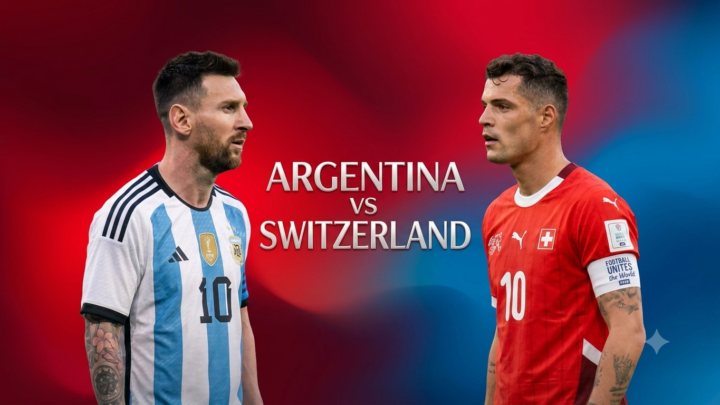
| B | Canada, Bosnia and Herzegovina, Qatar, Switzerland |
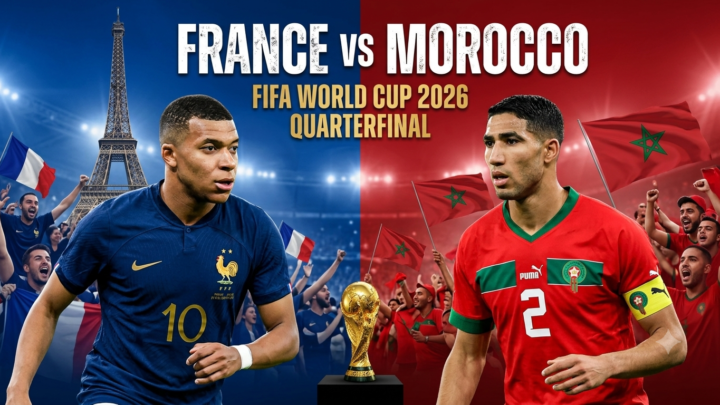
| C | Brazil, Morocco, Haiti, Scotland |
| D | USA, Paraguay, Australia, Türkiye |
| E | Germany, Curaçao, Côte d’Ivoire, Ecuador |
| F | Netherlands, Japan, Sweden, Tunisia |
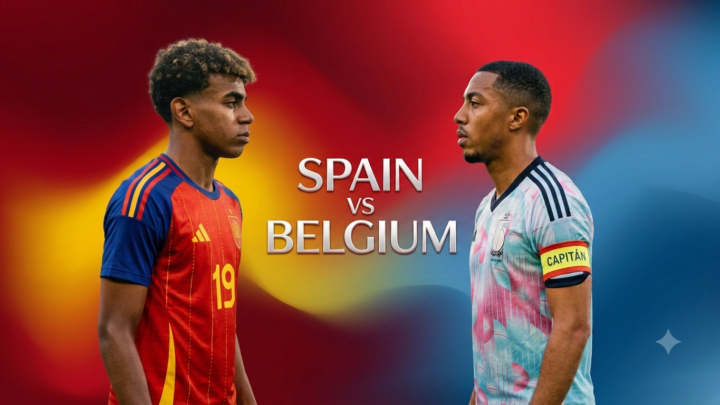
| G | Belgium, Egypt, IR Iran, New Zealand |
| H | Spain, Cabo Verde, Saudi Arabia, Uruguay |
| I | France, Senegal, Iraq, Norway |
| J | Argentina, Algeria, Austria, Jordan |
| K | Portugal, DR Congo, Uzbekistan, Colombia |
| L | England, Croatia, Ghana, Panama |
Group positions move with every result, so the live picture is the one that counts. Our standings page tracks all 12 tables in real time, including the race for those eight third-place spots.
The full schedule and key dates
The tournament lasts 37 days. The group stage filled the opening fortnight, from 11 to 27 June, before the knockouts begin on 28 June and build towards the final on 19 July. The two semi-finals are split between Arlington, Texas, on 14 July and Atlanta on 15 July.
| Stage | Dates |
|---|---|
| Group stage | 11 June to 27 June |
| Round of 32 | 28 June to 3 July |
| Round of 16 | 4 July to 7 July |
| Quarter-finals | 9 July to 11 July |
| Semi-finals | 14 July and 15 July |
| Third-place play-off | 18 July |
| Final | 19 July |
Kick-off times are spread across North American time zones to suit both local crowds and global audiences. For the day-by-day breakdown and every confirmed kick-off, keep our fixtures page open during the tournament.
The 16 host cities and stadiums
Sixteen cities stage the 104 matches: 11 in the United States, three in Mexico and two in Canada. The venues range from Estadio Azteca in Mexico City, a World Cup host for a record third time, to MetLife Stadium near New York, which holds the final. Most are existing NFL or club grounds adapted for football.
| Country | City | Stadium |
|---|---|---|
| Mexico | Mexico City | Estadio Azteca |
| Mexico | Guadalajara | Estadio Akron |
| Mexico | Monterrey | Estadio BBVA |
| Canada | Toronto | BMO Field |
| Canada | Vancouver | BC Place |
| USA | Atlanta | Mercedes-Benz Stadium |
| USA | Boston | Gillette Stadium |
| USA | Dallas | AT&T Stadium |
| USA | Houston | NRG Stadium |
| USA | Kansas City | Arrowhead Stadium |
| USA | Los Angeles | SoFi Stadium |
| USA | Miami | Hard Rock Stadium |
| USA | New York / New Jersey | MetLife Stadium |
| USA | Philadelphia | Lincoln Financial Field |
| USA | San Francisco Bay Area | Levi’s Stadium |
| USA | Seattle | Lumen Field |
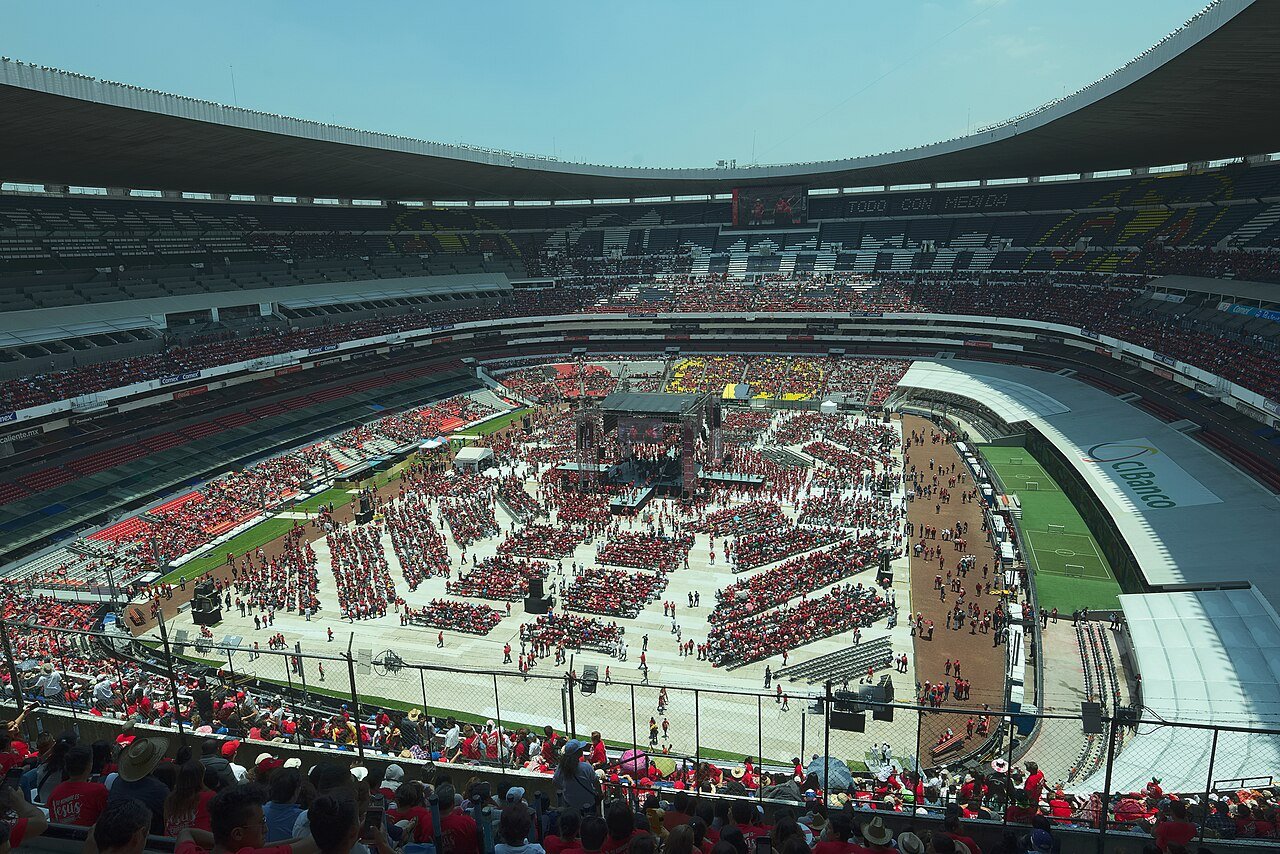
The spread is vast. Teams and travelling fans face long flights and several time zones between group games, and summer heat in cities such as Dallas, Houston and Miami is a real factor, which is why a number of the southern venues use roofs or air conditioning.
How and where to watch the World Cup 2026
Coverage is wide and, in several countries, free. In the United States, Fox and FS1 carry all 104 matches in English, with Telemundo and Universo covering them in Spanish. In the United Kingdom every match is free-to-air across the BBC and ITV. Canada has coverage through Bell Media’s CTV, TSN and RDS.
| Region | Where to watch |
|---|---|
| USA (English) | Fox, FS1; stream on Fox One, YouTube TV, Hulu + Live TV, Fubo, Sling, DirecTV |
| USA (Spanish) | Telemundo, Universo; stream on Peacock and the Telemundo app |
| UK | BBC and ITV, free-to-air; stream on BBC iPlayer and ITVX |
| Canada | CTV (free over the air), TSN, RDS via Bell Media |
According to Fox, around 70 of the 104 matches air on the main Fox network in the US, so many games are watchable without a cable package. In the UK, the BBC and ITV split the schedule and confirm their picks closer to each matchday. Live blogs, scores and reaction for every game sit on our live scores hub.
What is at stake and who to watch
Argentina arrive as defending champions, having won in 2022, and the usual heavyweights, France, Brazil, Spain, England and Germany, all carry genuine ambitions. The expanded format also rewards a wider field, giving debutants and smaller nations a more realistic route into the knockouts than the old 32-team cut allowed.
For the three hosts, the stakes are obvious. Mexico opened the tournament at the Azteca, the United States headline Group D, and Canada want to build on home soil in Group B. With 48 teams and 104 matches, the storylines come thick and fast, and the early group games have already reshaped expectations. Our group tables show exactly who is on course and who needs a result.
How 2026 differs from past World Cups
This is the most expanded World Cup ever staged. The jump from 32 to 48 teams lifts the match count from 64 in 2022 to 104, adds the new Round of 32, and stretches the tournament to 37 days. It is also the first finals shared by three host nations, and the winner now has to play eight matches rather than seven.
| Feature | 2022 (Qatar) | 2026 (USA, Canada, Mexico) |
|---|---|---|
| Teams | 32 | 48 |
| Groups | 8 of four | 12 of four |
| Matches | 64 | 104 |
| First knockout round | Round of 16 | Round of 32 |
| Host nations | 1 | 3 |
| Matches to win it | 7 | 8 |
FIFA approved the 48-team expansion back in 2017, aiming to widen access for confederations that rarely sent more than a handful of sides. The practical effect is more nations with a live chance of the knockouts, and more matches packed into the opening fortnight than any previous World Cup.
Frequently asked questions
How many teams are at the 2026 World Cup?
The 2026 World Cup features 48 teams, up from 32 at previous tournaments. They are divided into 12 groups of four. It is the first World Cup to use this expanded format, and it produces 104 matches in total, well up from the 64 played in 2022.
Where is the 2026 World Cup being held?
The tournament is co-hosted by the United States, Canada and Mexico across 16 cities. The US stages 11 host cities, Mexico three and Canada two. It is the first men’s World Cup shared by three nations, and the first held mainly in North America since the United States hosted in 1994.
When is the 2026 World Cup final?
The final is on 19 July 2026 at MetLife Stadium in East Rutherford, New Jersey, near New York. The tournament opened on 11 June at Estadio Azteca in Mexico City, so the finals run across 37 days from the first group match to the showpiece.
How do teams qualify from the group stage?
The top two teams in each of the 12 groups advance to the knockout stage, joined by the eight best third-placed teams. That sends 32 of the 48 nations into a new Round of 32. Goal difference is the first tie-breaker when teams finish level on points.
How can I watch the World Cup 2026?
In the US, Fox and FS1 show every match in English, with Telemundo and Universo in Spanish and streaming on Peacock. In the UK, all matches are free on the BBC and ITV. In Canada, CTV, TSN and RDS carry the games through Bell Media.
Who won the last World Cup?
Argentina won the 2022 World Cup in Qatar, beating France on penalties after a 3-3 final. They arrive in 2026 as defending champions. No nation has retained the trophy since Brazil won back-to-back titles in 1958 and 1962, which makes Argentina’s defence one of the tournament’s big subplots.
Why did the World Cup expand to 48 teams?
FIFA voted in 2017 to expand the finals from 32 to 48 teams, widening access for confederations that historically sent few sides and growing the tournament’s global reach. The 2026 edition is the first to use the larger field, which is why it runs to 104 matches and introduces the Round of 32 as a new opening knockout stage.
How many matches does the winner play?
The 2026 champions will play eight matches: three in the group stage, then the Round of 32, Round of 16, quarter-final, semi-final and final. That is one more than the seven needed to win a 32-team World Cup, a direct result of the expanded format and the extra knockout round.
Follow every match on Qualifinal
The 2026 World Cup is the deepest, widest and longest in the tournament’s history, and the group stage has already delivered. Bookmark this guide for the format and schedule, then follow the action live: our live scores, standings and fixtures pages are updated throughout, with match reports and analysis landing across the tournament.